Anionic, cationic and non-ionic PAM each solve a different flocculation problem. Here's how to pick the right grade for your effluent.
Polyacrylamide (PAM) is one of the most widely used synthetic polymers in industrial water and wastewater treatment. It works as a flocculant — bridging fine suspended particles into larger flocs that settle or dewater faster. But not all PAM is the same. Choosing between anionic, cationic and non-ionic grades — and their molecular weights — is the single biggest driver of clarifier efficiency, sludge dryness and polymer consumption cost.
How flocculation actually works
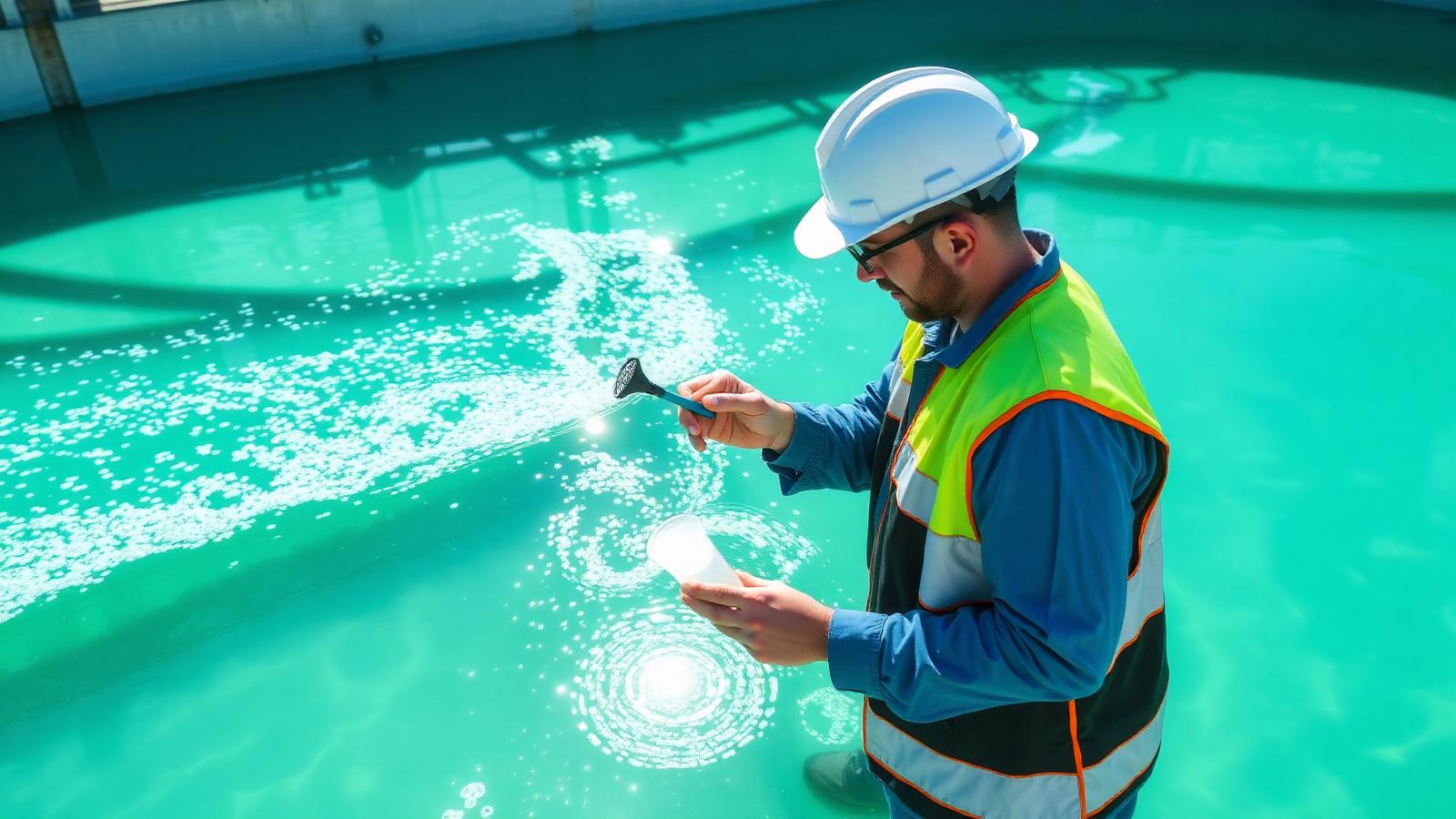
Fine solids in effluent stay suspended because they carry the same surface charge and repel each other. Treatment happens in two steps: coagulation neutralises that charge (alum, PAC, ferric chloride), and flocculation bridges the destabilised particles into settleable flocs. PAM is the bridging polymer — its long chains adsorb onto several particles at once, forming flocs large enough to settle in minutes rather than hours.
This is why polymer choice can never be made in isolation from the coagulant. Overdosing coagulant reverses the surface charge and a cationic polymer will then perform worse, not better. Always fix the coagulant dose first, then optimise the flocculant.
Anionic PAM (APAM)
Anionic polyacrylamide carries a negative charge and is the default choice for mineral processing, coal washery effluent, potable water clarification and any suspension where the fine solids themselves are positively charged or where a low-charge, high-molecular-weight bridging flocculant is needed.
- Molecular weight: typically 12–22 million Da
- Charge density: 10–40% mole
- Typical dose: 0.5–3 ppm on feed water
- Best for: mineral tailings, drinking water, pulp & paper white water, coal washery
Cationic PAM (CPAM)
Cationic PAM is essential for organic sludges. Municipal biological sludge, food & beverage effluent, dairy DAF float, tannery and slaughterhouse waste all carry a net negative surface charge — a cationic polymer neutralises that charge and bridges the particles into a dewaterable cake.
- Charge density: 10–80% mole (matched to sludge)
- Molecular weight: typically 6–14 million Da
- Typical dose: 2–8 kg of active polymer per tonne of dry solids
- Best for: belt-press, screw-press and centrifuge dewatering of biological sludge
As a rule of thumb, the more digested or more organic the sludge, the higher the charge density you need. Fresh primary sludge often runs well at 20–30% charge; anaerobically digested sludge frequently needs 50–70%.
Non-ionic PAM (NPAM)
Non-ionic PAM is used where charge interference would hurt performance — acidic or highly saline systems, coal fines flotation, and as a friction reducer or viscosifier in drilling and enhanced oil recovery. Because it relies on pure bridging rather than charge neutralisation, it tolerates extreme pH and high conductivity better than either ionic grade.
Quick comparison
| Grade | Charge | Typical MW (million Da) | Primary use |
|---|---|---|---|
| APAM | Anionic | 12–22 | Mineral tailings, potable water, paper |
| CPAM | Cationic | 6–14 | Biological sludge dewatering, DAF |
| NPAM | Non-ionic | 8–16 | Acidic/saline systems, drilling, EOR |
Make-up and dosing — where most plants lose performance
- Prepare at 0.1–0.3% concentration. Stronger solutions will not dissolve fully and cause fish-eyes.
- Wet the powder evenly through an eductor; never dump powder into a vortex.
- Age the solution 30–60 minutes with gentle stirring before dosing.
- Dose into a zone of moderate turbulence, then allow 10–20 seconds of gentle flocculation before the clarifier.
- Never re-pump matured polymer through a high-shear centrifugal pump — it shears the chains and kills performance.
How to pick the right grade
- Measure or classify the sludge/solids charge (zeta potential or jar test).
- Screen 3–4 candidate polymers of each charge type at 0.5–5 ppm.
- Track floc size, settling velocity and supernatant turbidity.
- Check filtrate quality and cake dryness, not just settling speed.
- Confirm at plant scale with 24 h continuous dosing before switching.
Troubleshooting field problems
- Small, fragile flocs → molecular weight too low, or shear after dosing. Move the dose point downstream.
- Cloudy supernatant with good flocs → coagulation stage under-dosed, not a polymer problem.
- Cake sticks to the belt → charge density too high; step down one grade.
- Rising polymer consumption over weeks → check make-up water hardness and solution ageing time.
“A jar test that costs you two hours can save 20–30% of annual polymer spend. Always trial before you commit.”
Storage, handling and safety
Store PAM powder in a dry area below 30°C, away from direct sunlight, and keep bags sealed — the polymer is hygroscopic and caking will ruin dissolution. Spilled solution is extremely slippery; wash down immediately. Shelf life is typically 24 months for powder and 6 months for emulsion grades.
Mauryansh Impex supplies anionic, cationic and non-ionic PAM in 25 kg bags and 1 MT jumbo bags, backed by batch-wise COA and TDS. Request a sample to run your own jar test — our technical team will help you interpret the results.